
Women's World Cup 2027: Everything to Know About the Tournament, Host Nation, Teams and Favorites
The Women’s World Cup 2027 will open a new chapter in FIFA history by bringing the competition to South America for the very first time.
Brazil’s rich football tradition, and enthusiastic supporters create an ideal setting for what could become one of the most memorable editions of the Women’s World Cup.
The tournament will once again feature 32 national teams competing over five weeks, combining football with one of the sport’s most iconic destinations.
Expectations are high not only because of the quality of the participating teams but also because of the opportunity to further accelerate the development of women’s football.
Watch Norway vs England live with TV channels, predicted lineups, tactical analysis, and FIFA World Cup 2026 quarterfinal predictions.
Brazil Becomes the First South American Women’s World Cup 2027 Host 🇧🇷
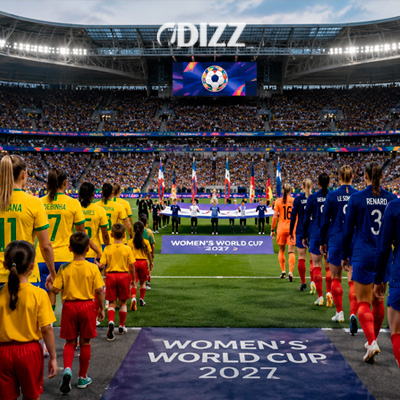
For decades, Brazil has played a central role in football history, producing legendary players and hosting some of the sport’s biggest competitions.
The Women’s World Cup 2027 represents another milestone, as the country welcomes the world’s premier women’s tournament for the first time.
Hosting the event reflects the continued expansion of women’s football and provides South America with an opportunity to showcase its football culture on the stage.
The tournament is also expected to encourage greater investment in women’s football across the continent.
Why Brazil Is an Ideal Host 🌎
Brazil offers numerous advantages for a tournament of this size.
Among the most important are:
- International football tradition
- Modern stadium network
- Extensive tourism infrastructure
- Large international airports
- Experienced event organization
- Passionate football supporters
- Diverse cultural attractions

Competition Dates and Women’s World Cup 2027 Tournament Schedule 📅
The tournament will take place during the middle of 2027, providing approximately one month of international football.
After the opening match, teams will compete throughout the group stage before advancing into the knockout rounds.
Every elimination match increases the pressure, culminating in the championship final that crowns the next world champion.
Supporters can expect daily football during much of the competition. The expected progression includes:
- Opening match
- Group stage
- Round of 16
- Quarterfinals
- Semifinals
- Third-place playoff
- Final
Each stage increases the intensity as the number of remaining teams gradually decreases.
The 32-Team Format Returns ⚽
The successful tournament structure introduced in the previous edition will remain unchanged.
Thirty-two national teams will compete in eight groups containing four nations each. Every team plays three group-stage matches, with only the top two teams advancing into the Round of 16.
From that point onward, every match becomes a direct elimination contest.
Teams compete for qualification based on:
- Total points
- Goal difference
- Goals scored
- Head-to-head performance
- Fair play record when necessary
Every point earned during the group stage can prove decisive.
Eight Brazilian Cities Will Welcome the World 🏙️
The tournament will be played across eight different host cities, allowing supporters to experience the diversity of Brazil while following the competition.
The selected cities include:
- Rio de Janeiro
- São Paulo
- Brasília
- Belo Horizonte
- Fortaleza
- Salvador
- Recife
- Porto Alegre
Each location contributes its own football traditions, regional identity, and tourism attractions. Every host city offers a unique atmosphere.
Supporters will experience historic football stadiums, local traditions, regional cuisine, and passionate crowds throughout the tournament.
This nationwide approach allows millions of Brazilian fans to participate while showcasing different parts of the country to international visitors.
The variety of host cities is expected to become one of the tournament’s greatest strengths.
Legendary Stadiums Will Stage Women’s World Cup 2027 Matches 🏟️
Unlike many international tournaments that require significant new construction, Brazil already possesses numerous world-class football venues.
Several of these stadiums previously hosted FIFA competitions and remain among South America’s most recognizable sporting landmarks.
Modernization efforts will primarily focus on improving facilities, accessibility, and supporter experience.
Expected venues include:
- Maracanã
- Mineirão
- Arena Corinthians
- Arena Fonte Nova
- Arena Castelão
- Arena Pernambuco
- Beira-Rio
- Mané Garrincha
These stadiums provide excellent capacity, infrastructure, and international experience.
Explore the history of football’s greatest winners and understand what separates World Cup champions from the rest.
Qualification Will Bring Together the World’s Best 🌍
Qualification tournaments across every FIFA confederation determine which nations earn a place in Brazil.
As host nation, Brazil automatically qualifies, while the remaining places are distributed through continental competitions involving Europe, South America, and Oceania.
The qualification process allows both established powers and emerging nations to compete for a place on football’s biggest stage.
Participating confederations include:
- UEFA
- CONMEBOL
- CONCACAF
- AFC
- CAF
- OFC
This worldwide representation makes the Women’s World Cup one of the sport’s most globally diverse competitions.
Watch Czechia vs South Africa live with full tactical analysis, predicted lineups, key stats, and crucial World Cup implications.
Women’s World Cup 2027 Favorites Enter With High Expectations 🏆
Several nations appear capable of winning the tournament.
Spain continue to build on recent international success through outstanding technical quality and midfield dominance.
England remain among Europe’s strongest teams, while the United States continue developing a talented new generation capable of competing for another title.
Germany, France, Japan, Sweden, Australia, Canada, and Brazil also possess enough quality to challenge for the championship.
Women’s football has evolved rapidly around the world.
Professional leagues continue expanding, coaching standards have improved, youth academies are producing more elite players, and investment has increased significantly across multiple continents.
These developments have reduced the gap between traditional powers and emerging football nations.
Brazil’s Opportunity to Win at Home 💚💛
Few opportunities generate greater excitement than competing for a World Cup in front of home supporters.
Brazil enters the tournament determined to capture its first Women’s World Cup title while inspiring future generations of players throughout the country.
The atmosphere inside Brazilian stadiums could become one of the team’s greatest advantages.
Several experienced players are expected to play important roles.
Among them are:
- Debinha
- Kerolin
- Adriana
- Gabi Portilho
- Tarciane
- Antônia
Additional emerging players could strengthen the squad before the tournament begins.
Expected Women’s World Cup 2027 Long-Term Benefits 🚀
Organizers hope to create:
- Greater participation among girls
- Stronger professional leagues
- Increased commercial investment
- Better youth development
- Expanded coaching education
- More international visibility
- Improved football facilities
These outcomes could influence women’s football for many years.
Watch Germany vs Ivory Coast live with tactical breakdowns, predicted lineups, key players, and FIFA World Cup 2026 Group E analysis.
Why the Women’s World Cup 2027 Could Become One of the Greatest Ever ❤️
The Women’s World Cup 2027 combines elite international football with one of the world’s most passionate football nations.
Brazil’s famous stadiums, experienced event organization, enthusiastic supporters, and football culture provide an exceptional setting for the tournament.
With stronger national teams than ever before and growing global interest, the competition has every opportunity to become one of FIFA’s most successful World Cups.
FAQ
1. Which country will host the Women’s World Cup 2027?
- Brazil will host the tournament, becoming the first South American nation to organize the FIFA Women’s World Cup.
2. How many teams will participate?
- Thirty-two national teams will compete for the world championship.
3. Which cities will host matches?
- Rio de Janeiro, São Paulo, Brasília, Belo Horizonte, Fortaleza, Salvador, Recife, and Porto Alegre will stage matches.
4. Which teams are expected to compete for the title?
- Spain, the United States, England, Germany, France, Japan, Brazil, Australia, Sweden, and Canada are among the strongest contenders.
5. Why is the 2027 Women’s World Cup considered so important?
- It will be the first edition hosted in South America, providing a historic opportunity to expand football throughout the region while showcasing Brazil’s football tradition.
