
World Cup Champions: Complete History, Records and Legendary Winners
Learn how the title of World Cup champions represents the highest achievement in international football.
Since the first FIFA World Cup in 1930, only a small group of nations have managed to lift the trophy, proving how difficult it is to dominate the global stage.
Winning the World Cup requires more than talent.
Champions need tactical balance, elite players, mental strength, squad depth, and the ability to perform under extreme pressure.
Across different eras, teams such as Brazil, Germany, Italy, Argentina, France, Uruguay, England, and Spain have built unforgettable legacies.
Watch Brazil vs Haiti live with tactical insights, predicted lineups, team news, and key FIFA World Cup 2026 Group C implications.
World Cup Champions and the Meaning of Football Greatness 🏆
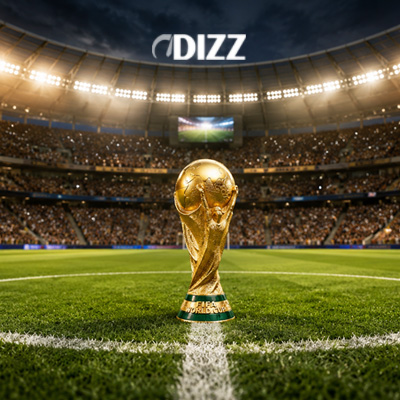
Becoming one of the World Cup champions means entering football history forever.
The tournament is played only every four years, which makes each edition rare and emotionally powerful.
Unlike club football, national teams have limited preparation time, fewer matches together, and enormous pressure from entire countries.
That is why World Cup success often depends on a perfect combination of form, leadership, tactical planning, and decisive individual moments.
A team must survive group-stage pressure, knockout matches, extra time, penalty shootouts, injuries, suspensions, and elite opponents.
Even the strongest squads can fail because one mistake can end the campaign. This explains why so many talented generations never became World Cup champions.
Countries With the Most World Cup Titles 📊
Brazil remain the most successful nation in tournament history with five titles. Germany and Italy follow with four each, while Argentina have three.
The small number of winners shows how exclusive the tournament is.
Many strong countries have reached finals or semifinals, but only eight have completed the journey. Winning requires excellence across an entire month, not just one great performance.
Brazil and the Standard of World Cup Champions 🇧🇷
Brazil are the greatest name in World Cup history. Their five titles came in 1958, 1962, 1970, 1994, and 2002.
Across those victories, Brazil produced legendary players such as Pelé, Garrincha, Romário, Ronaldo, Rivaldo, Ronaldinho, Cafu, and Kaká.
Brazil’s World Cup identity is connected to creativity, attacking football, technical skill, and unforgettable individual brilliance.
The 1970 Brazil team is often considered one of the greatest national teams ever assembled.
With Pelé, Jairzinho, Tostão, Rivellino, and Carlos Alberto, Brazil defeated Italy 4-1 in the final and created a model of attacking football still remembered today.
Germany and Italy: Consistency and Tournament Mentality 🇩🇪🇮🇹
Germany and Italy both have four World Cup titles, and both are known for their competitive mentality.
Germany won in 1954, 1974, 1990, and 2014. Their history is marked by discipline, efficiency, strong midfielders, elite goalkeepers, and tactical intelligence.
Italy won in 1934, 1938, 1982, and 2006. Italian success has often been linked to defensive organization, intelligent game management, and decisive performances in knockout matches.
World Cup champions do not always need to play the most beautiful football.
They need to win decisive moments, control pressure, and remain mentally strong when matches become difficult.
Argentina, France, Uruguay, England and Spain 🏅
Argentina’s three titles came in 1978, 1986, and 2022. The country’s World Cup story is closely connected to Diego Maradona and Lionel Messi, two of the greatest players in history.
France won in 1998 and 2018, becoming a modern football powerhouse with athletic, technical, and tactically flexible teams.
Uruguay won the first World Cup in 1930 and shocked Brazil in 1950 with one of the most famous victories in football history.
England won their only title in 1966 at home, while Spain claimed their first World Cup in 2010 with a possession-based team led by Xavi, Iniesta, Casillas, Villa, and Puyol.
Each nation won in a different way.
Brazil often relied on flair and attacking genius. Italy emphasized defensive strength. Spain dominated possession.
France combined speed and power. Argentina blended emotional intensity with elite individual quality.
Legendary World Cup Finals That Defined History ⚔️
Some finals became unforgettable because of drama, goals, controversy, or iconic performances.
The 1950 Brazil vs Uruguay match became known as the Maracanazo. The 1966 final gave England its only title.
The 1986 tournament belonged to Maradona. The 1994 final was decided by penalties. The 2006 final is remembered for Italy’s victory and Zidane’s red card.
The 2022 final between Argentina and France is widely viewed as one of the greatest finals ever played.
A World Cup final is more than a match.
It becomes a national memory. One goal, one save, one penalty, or one mistake can define a player’s legacy forever.
Greatest Players Among World Cup Champions 🌟
Many of football’s greatest players became immortal through the World Cup.
Pelé won three titles with Brazil. Maradona carried Argentina in 1986. Messi completed his career with the 2022 title.
Ronaldo Nazário dominated the 2002 tournament. Zidane led France in 1998. Iniesta scored Spain’s winning goal in 2010.
The greatest World Cup champions usually have at least one player capable of deciding matches individually.
However, no player wins alone. Every champion also needs a strong goalkeeper, reliable defenders, hardworking midfielders, and tactical balance.
What Makes a Team Become World Cup Champions? 🏆
Several qualities appear repeatedly among World Cup winners.
Champions usually have:
- A reliable goalkeeper
- Strong central defenders
- Midfield control
- At least one elite goal scorer
- Tactical flexibility
- Emotional leadership
- Strong bench options
- Mental strength in knockout matches
Modern tournaments demand more than eleven great players.
Injuries, fatigue, suspensions, and tactical changes make squad depth essential. Recent champions have shown that substitutes can decide finals, semifinals, and penalty shootouts.
Watch Czechia vs South Africa live with full tactical analysis, predicted lineups, key stats, and crucial World Cup implications.
World Cup Champions and the Evolution of Football 📈
The World Cup has changed dramatically since 1930.
Early tournaments were smaller and more regional. Over time, the competition expanded, became more global, and attracted stronger tactical preparation.
The 2026 edition is the largest ever, with 48 teams and more matches than any previous tournament.
This expansion creates new opportunities for emerging nations, but the pressure to become champion remains enormous.
Modern World Cup champions must be physically intense, tactically flexible, technically secure, and mentally resilient.
The game is faster, squads are deeper, and opponents are better prepared than ever before.
Key Takeaways About World Cup Champions 🎯
The history of World Cup champions shows that football greatness can be built in different ways.
Some teams win with attacking brilliance, others with defensive discipline, midfield control, or individual genius.
Brazil remain the most successful nation, but Germany, Italy, Argentina, France, Uruguay, England, and Spain all hold unique places in tournament history.
Becoming world champion is rare because it requires talent, timing, unity, strategy, and courage under pressure.
FAQ
1. Which country has won the most World Cups?
- Brazil have won the most World Cups, with five titles.
2. How many countries have been World Cup champions?
- Only eight countries have won the tournament: Brazil, Germany, Italy, Argentina, France, Uruguay, England, and Spain.
3. Who won the first FIFA World Cup?
- Uruguay won the first World Cup in 1930.
4. Who are the current defending World Cup champions?
- Argentina are the defending champions after winning the 2022 tournament.
5. Why is winning the World Cup so difficult?
- Because teams must defeat elite opponents under extreme pressure across group-stage and knockout matches, where one mistake can end the tournament.
